(001) — Brand Foundation · Round Two
Round one landed three directions in the GCC governance category default. The visual sweep that followed showed why — five regional competitors and the global reference set all use some variant of navy plus warm metal plus serif. The three directions below leave the chorus. Each one would work. Each one trades different things off. The third is the one we'd build, and the comparison at the end of this page shows you why.
(002) — Why these three
Round one missed the GCC category default. Five regional competitors operate in some version of navy + warm metal + serif. Two more occupy teal + warm coral. One owns deep green + gold as Saudi-state register. The directions below leave all of those territories on purpose. Each one signals authority through a different lever — editorial credibility, considered restraint, or disciplined challenge — and each one is materially distinguishable from anything Layla, Khalid, or Dana already see in the category.
Your beachhead reader
First-time GCC directors
Layla — first independent director on a private/family board. Reads before she trusts. Screens for credibility before she screens for solution. Not interested in motivational language.
How buyers find you
Book-led + foreword authority
The book is the trust anchor. The brand can take more visual risk because the IP is doing the trust work. This is the lever round one over-priced for safety.
Where the field sits
A chorus, not a contest
Five GCC competitors converge on the same visual register at varying budgets. Two own teal. None own the directions below. Hawkamah is the worst-designed brand in the chorus, not the strongest.
(003) — Direction A · Counsel-led
A Counsel brand earns trust through institutional precision without institutional sameness. Disruptive Director as the serious publisher of governance practice. Oxblood replaces navy. Bone replaces cream. The register shifts from financial-institution to legal-press — closer to a Yale University Press jacket than a bank annual report.
Best fit if Maali wants the Counsel register that earns the first board meeting through what's printed on the cover, not who's standing on a stage.
01 Typography specimen
The Counsel typography reads like a serious publishing imprint, not a corporate brochure. Newsreader is a contemporary text serif drawn for long reading at small sizes — closer to FT Weekend or HBR than to a financial annual report. Inter underneath is the modern operator sans, refined enough to carry tabular data, footnotes, and case-citation style without visual noise. The combination reads as edited, not designed.
A.C.T.I.V.E. · 380M · 41M
02 Color system
03 Voice samples
Homepage hero
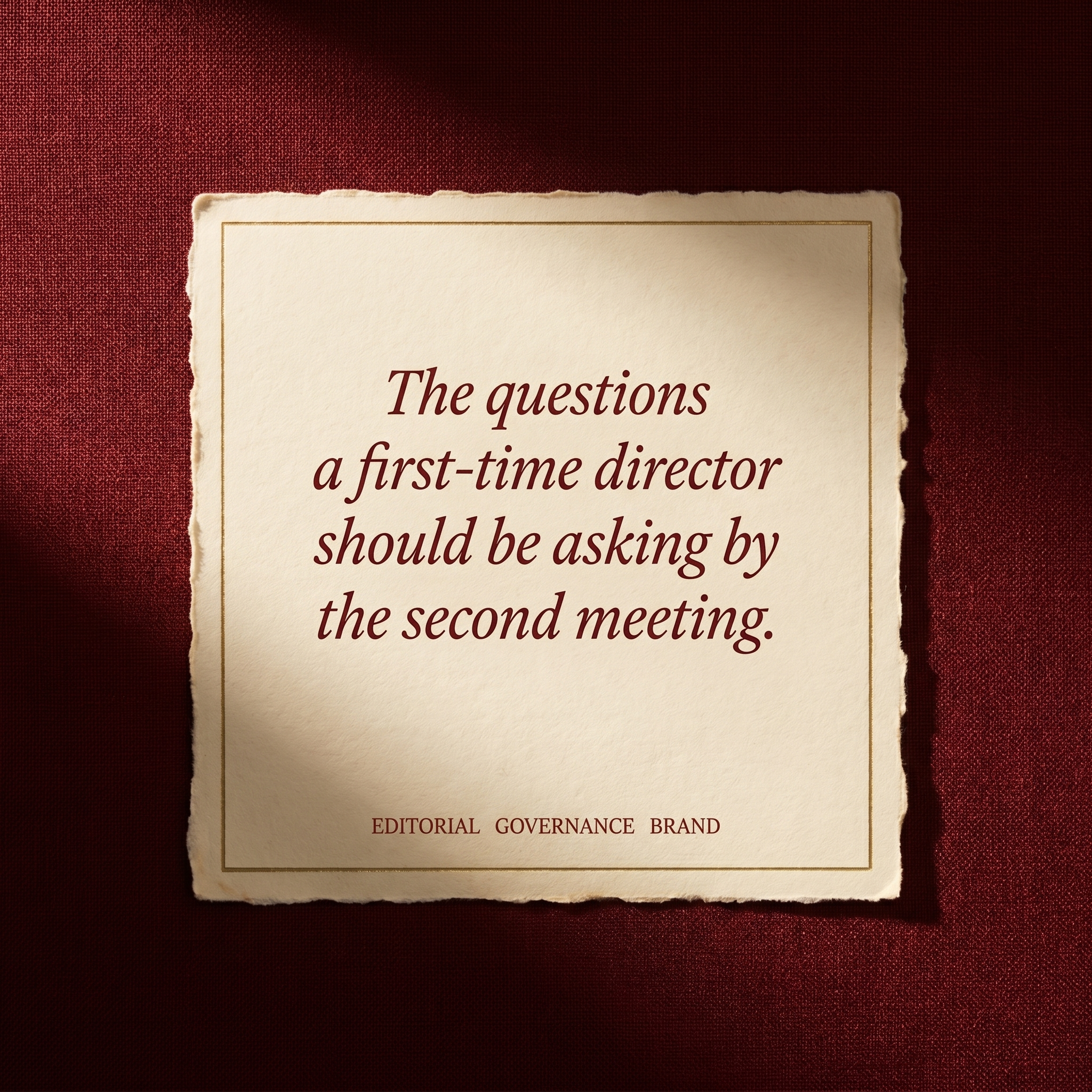
The questions a first-time director should be asking by the second meeting. And the ones most boards stop asking by the second year.
Email subject line
A field note on board oversight, from a regulator who has read both sides of the agreement.
LinkedIn post open
A pattern that recurs across nearly every governance failure I've reviewed in the GCC. Worth naming carefully.
04 Photography direction
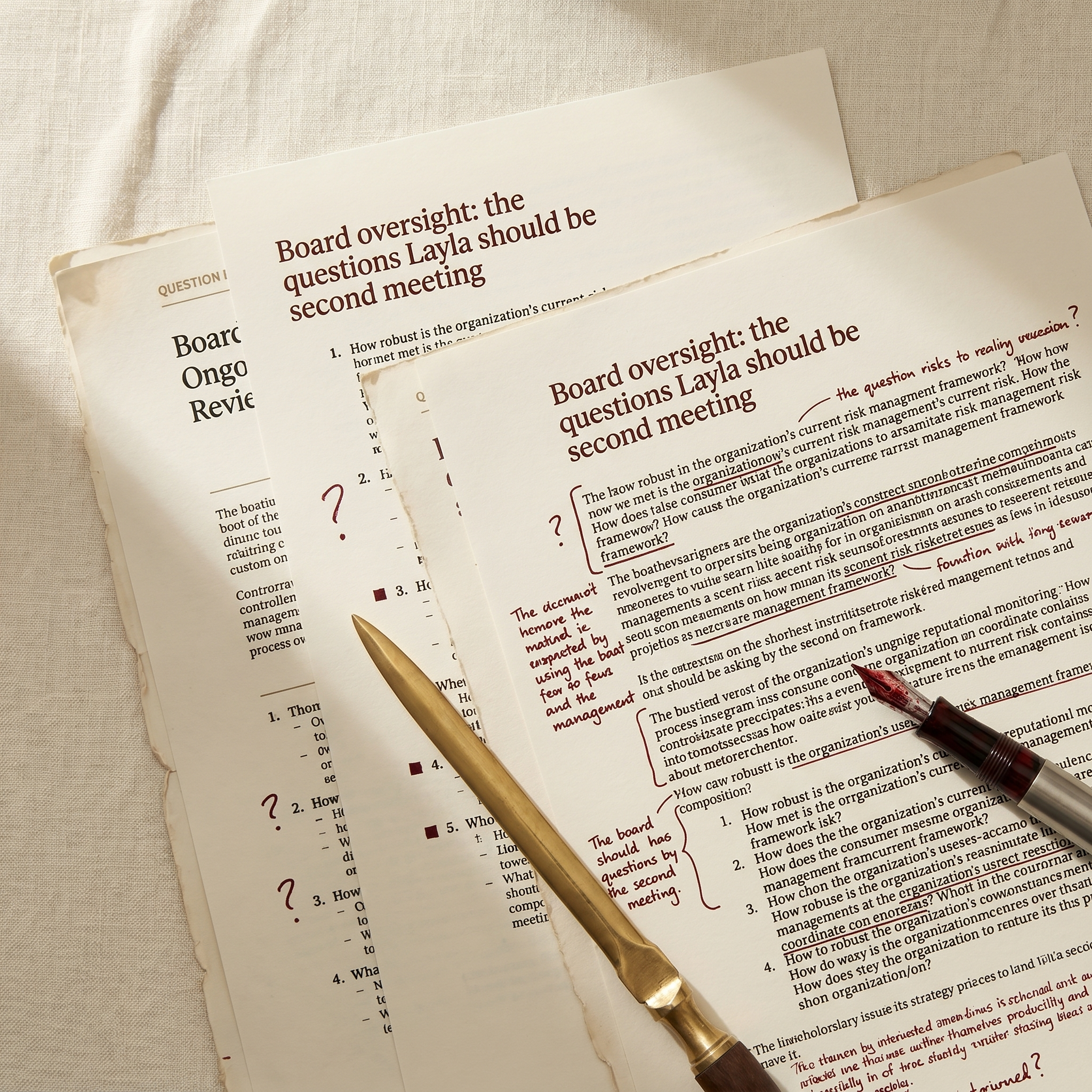
Editorial portraiture in the long-form-magazine tradition. Subjects mid-thought, mid-sentence. Warm tungsten or available daylight, never strobe. The composition of a New Yorker profile or an FT Lex column. Mid-tone shadows. Detail of book spines, board papers, marked-up agendas. Never conference-stage photography. Never lifestyle. Never the standard regional governance image library — tower-skyline-handshake-ribbon-cutting.
05 Graphic motifs
A single oxblood hairline rule under section openings. Brass rule above footnotes. Drop caps on chapter openings. Small-cap section labels. Pull quotes set in italic Newsreader at 1.4× body, indented from the body block. Numerics set tabular with custom ligatures. Nothing rounded. Nothing geometric. The graphic register of a publishing house jacket, not a governance dashboard.
06 Commercial rationale
Why this direction drives commercial outcomes
The Counsel register reframes Disruptive Director as a serious imprint before Layla reads a single chapter. The book becomes the trust anchor it needs to be. The visual register pulls the brand out of the Hawkamah/Mudara/IoD chorus without sacrificing institutional weight, which protects the enterprise sale to Dana. Pricing power holds because the Counsel register never argues on price — it argues on framing. The cost is execution discipline: oxblood at scale needs careful color management on print, and Newsreader needs typographic rigor on every layout. Addressable in the design system handoff.
07 Iconography
Quill
Volume
Charter
Mark
Quote
Tenure
Editorial line work. 1.4px strokes, square terminals, classical proportions. Used at 20–40px for navigation and 48–96px for chapter openings and resource cards. Never filled. Never rounded. The icons read as marginalia — the kind of small detail you find in a Yale University Press edition, not a SaaS dashboard.
08 Application mockups
D.D.
Disruptive Director
Maali Qasem Khader
Founder · Author
maali@disruptivedirector.com
disruptivedirector.com
Business card · Oxblood on bone
Chapter One · Field note
The questions a first-time GCC director should be asking by the second meeting — and the ones most boards stop asking by the second year.
Website hero · Counsel register
Social post · Counsel attribution
09 Brand application — AI-rendered mockups
Book cover · The Counsel register
Homepage hero · Oxblood on bone
Printed artifact · Restrained brass detail
Brand environment · Counsel spatial
10 Social application — AI-rendered posts
(004) — Direction B · Practice-led
A Practice brand earns through quiet seriousness, not institutional volume. Disruptive Director as a considered design discipline applied to governance — closer to Aesop, Frama, or Apartamento than to a financial institute. Terracotta replaces gold. Linen replaces cream. The register signals that the work is craft, the tools are usable, and nothing is shouting.
Best fit if Maali wants the brand to feel like a considered practice Layla returns to, not an institute she enrols in.
01 Typography specimen
The Practice typography reads with the warmth of a considered design imprint. Cormorant Garamond carries the elegance of a slow-typeset book interior — the inheritance is classical, but the rendering is contemporary. Manrope underneath is a rounded operator sans, refined enough to carry checklists, decision trees, and resource cards without visual fatigue. The combination reads as warm, confident, and useful.
A.C.T.I.V.E. · six chapters · one practice
02 Color system
03 Voice samples
Homepage hero
A practice for directors who would rather read carefully than perform confidently.
Email subject line
A short field note on the difference between asking the question and waiting for the answer.
LinkedIn post open
A small habit that distinguishes the directors who move boards from the directors who attend them. Worth the slow read.
04 Photography direction
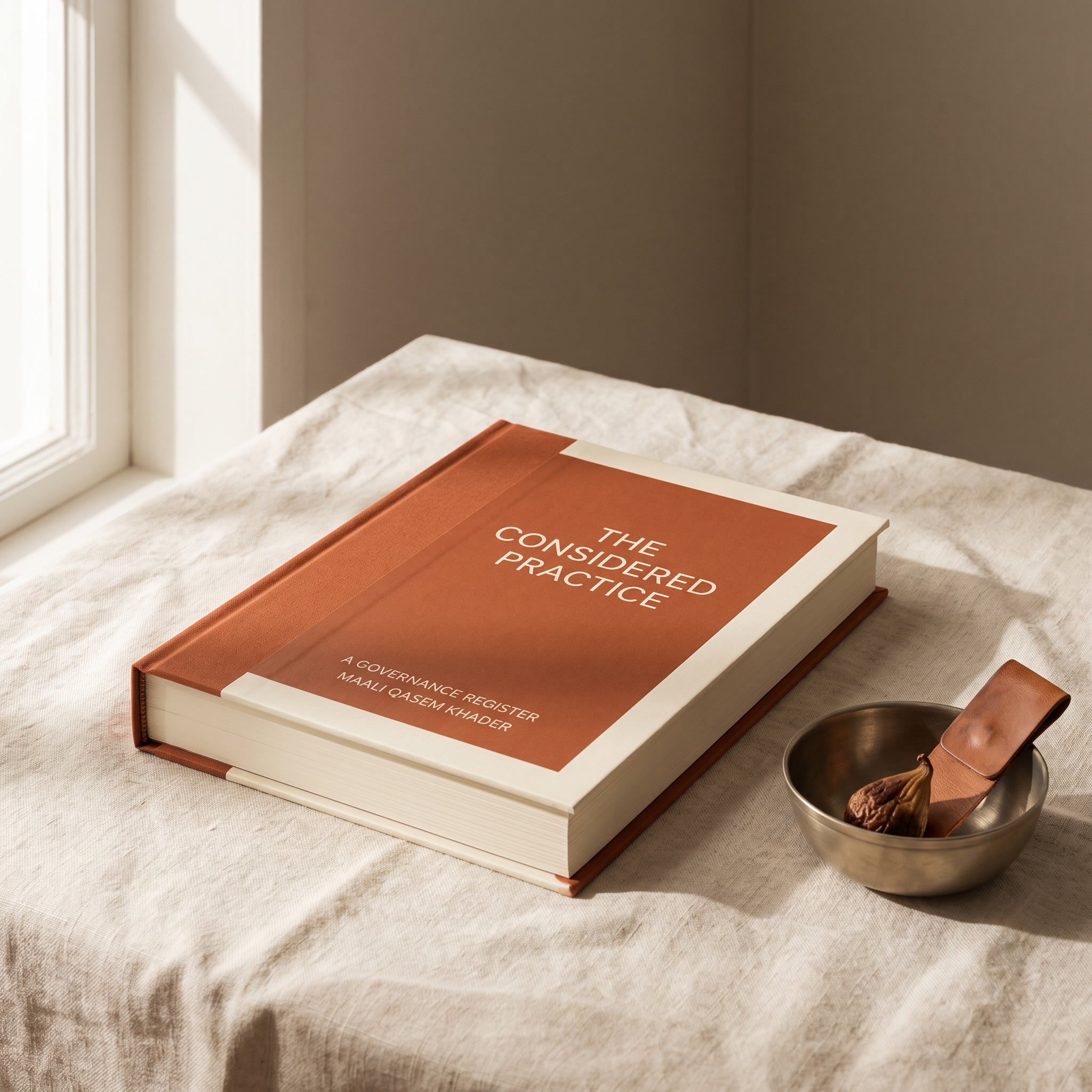
Still-life and reading-room photography in the Aesop / Cereal / Apartamento tradition. Objects rather than people: the book on a desk, a marked-up agenda, a tea cup beside a chapter, a fountain pen on linen. When subjects appear, they are anonymous — hands annotating, a back of a head reading. Soft directional daylight. Warm shadows. The composition of an editorial product story. Never conference photography. Never standard regional governance imagery.
05 Graphic motifs
Generous white space as the dominant motif. Single terracotta hairline at chapter openings. Numbered chapter dividers in pewter. Tools rendered as quiet diagrams — checklists with restrained terracotta tick marks, decision trees with pewter rules, question packs typeset like book interiors. Tooling reads as part of the practice, not as marketing collateral. Never illustrations. Never icons treated as decoration. The graphic register is the slow page, not the dashboard.
06 Commercial rationale
Why this direction drives commercial outcomes
The Practice register is the warmest of the three directions and earns the highest score on Layla fit specifically. It signals that the work is for serious readers without being institutionally cold. It earns email opens because the brand reads like a respected publisher's newsletter, not an institute's announcement. Pricing power is real but moderate — warmth tilts the brand toward the consumer/individual buyer, which slightly weakens the enterprise sale to Dana. The trade-off is honest: highest fit with the beachhead, slightly softer fit with the institutional buyer. Best used as a master identity if Maali is willing to lead with reader trust and let the enterprise sale be carried by the book and the foreword strategy rather than the brand's institutional weight.
07 Iconography
Page
Lines
Centre
Spine
Series
Practice
1.4px strokes, rounded terminals, generous interior space. Used at 24–40px on resource cards and tool downloads, 64–96px on chapter dividers. The icons read as a small visual library — the kind a careful design studio builds for a publishing client, not the kind a SaaS gets from an icon set.
08 Application mockups
DD
Disruptive Director
Maali Qasem Khader
Founder · Author
maali@disruptivedirector.com
disruptivedirector.com
Business card · Ink on linen, terracotta wordmark
Practice 03 · Considered review
Tools and questions for first-time directors who would rather read carefully than perform confidently. Designed to be used in the meeting, not stored in a drawer.
Website hero · Practice register
Social post · Considered note
09 Brand application — AI-rendered mockups
Book cover · The Considered Practice
Homepage hero · Terracotta on linen
Printed artifact · Warm pewter detail
Brand environment · Practice spatial
10 Social application — AI-rendered posts
(005) — Direction C · Editorial-led Recommended
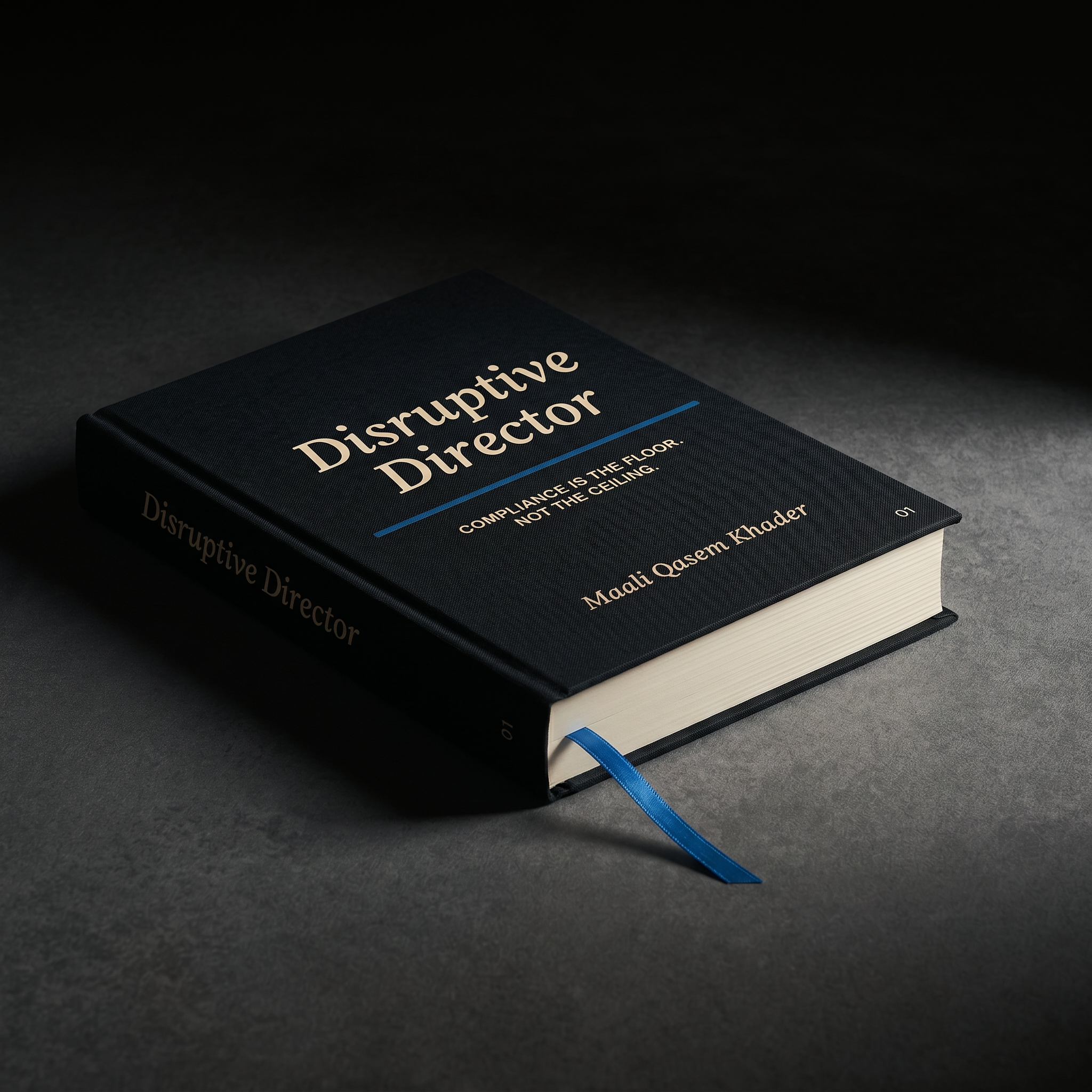
An Editorial brand earns through disciplined challenge, not loud disruption. Disruptive Director as the serious editorial voice that names what the GCC governance category will not. The register sits with The Economist, Aeon, Logic, and Le Monde Diplomatique — institutional weight on a dark canvas, not Vignelli theatre. Ink replaces navy. Bone replaces cream. Signal blue replaces gold. Nothing in the GCC governance field looks like this.
Best fit if Maali wants the brand to land like a serious editorial position. The book is the trust anchor; this register lets the visual identity carry the challenge that the IP already carries.
01 Typography specimen
The Editorial typography reads with the institutional weight of a serious masthead applied to a directors' practice. Source Serif 4 italic carries the editorial position — restrained, confident, the inheritance of long-form journalism rather than corporate annual reports. Inter Tight underneath is a contemporary editorial sans, refined enough to carry data tables, footnotes, and small-cap navigation without visual collapse. The combination reads as edited, not authored — institutional in weight, individual in voice.
A.C.T.I.V.E. · six chapters · one position
02 Color system
03 Voice samples
Homepage hero
Compliance is the floor. This is what the ceiling looks like.
Email subject line
An editorial position the GCC governance category will not take.
LinkedIn post open
A reading of the latest UAE governance code that the institutes won't publish. Worth reading carefully.
04 Photography direction
Editorial-masthead photography. Single key light, deep shadows, no fill. Subjects mid-thought, mid-paragraph, mid-question — never posing. The composition of an Aeon profile, a Logic magazine cover, an FT Weekend long read. Document-detail close-ups: marked-up codes, struck-through paragraphs, marginalia in a board paper. The photography reads as the editorial section of a serious publication, not a corporate communications library.
05 Graphic motifs
Editorial discipline as the dominant motif. Generous black fields. Hairline rules in signal blue at section openings — never decorative, always structural. Italic display lifted into pull quotes with em-spaced openings. Numbered footnotes throughout, set in small caps. Tools rendered as quiet diagrams: question packs typeset like editorial spreads, decision trees drawn with pewter rules on smoke surfaces. Every layout reads as a page, not a screen. No icon decoration. No illustration. The graphic register is the masthead — institutional weight, individual position.
06 Commercial rationale
Why this direction drives commercial outcomes
The Editorial register opens material territory in a category whose visual default is institutional sameness. For Layla, the dark canvas reads as a serious editorial position rather than a curriculum — she is being addressed as a reader, not a student. For Dana, the institutional weight remains intact because the typography is restrained and the layout is editorial, not creative. For Khalid, the contemporary register signals that this is a brand built for the directors who will run boards over the next decade, not the institutes that ran them over the last one. Pricing power is highest of the three directions because institutional editorial weight never argues on price — it argues on position. Cross-sell holds because the dark canvas is consistent across book, vault, course, and enterprise material. The execution risk is real: dark backgrounds need careful handoff for print, and italic display needs typographic discipline at every layout. Addressable in the design system handoff.
07 Iconography
Masthead
Column
Spread
Folio
Pull
Position
Editorial masthead glyphs. 1.5px strokes, square terminals, single signal-blue node where the position turns. Used at 24–40px for chapter dividers, 64–96px for editorial section openings, never as buttons or affordances. The discipline is in the restraint — the icon set carries the position, but only one glyph is on screen at a time.
08 Application mockups
D.D.
Disruptive Director
Maali Qasem Khader
Founder · Author
maali@disruptivedirector.com
disruptivedirector.com
Business card · Ink with signal blue masthead
Field Note 01 · Editorial position
A practice for first-time GCC directors who would rather take an editorial position on the work than recite a corporate-governance code. The book opens the position. The vault provides the tools. Both are read carefully.
Website hero · Editorial register (dark canvas)
Social post · Masthead position
09 Brand application — AI-rendered mockups
Book cover · The Editorial Disciplinarian
Homepage hero · Signal blue on ink canvas
Printed artifact · Masthead editorial detail
Brand environment · Dark canvas spatial
10 Social application — AI-rendered posts
(006) — Comparison
Seven criteria. Scores reflect relative performance across the three directions for Disruptive Director's specific commercial setup — book-led launch, GCC beachhead, dual reader/enterprise audience. Any of these directions would work. The matrix is here to make the trade-offs explicit so the conversation can be about what the brand is optimising for, not whether the work is sound.
| ·Criterion | ACounselCounsel-led | BPracticePractice-led | C · RecommendedEditorialEditorial-led |
|---|---|---|---|
| Distance from GCC category default | StrongOxblood + bone clears the navy + gold chorus. Closest of the three to the institutional register Hawkamah occupies. | StrongestTerracotta + linen sits in genuinely uninhabited GCC governance territory. Visually unlike anything in the field. | StrongestDark canvas with restrained signal blue is unclaimed in the category. No competitor commits to this register at all. |
| Fit with Layla (beachhead reader) | StrongCounsel earns Layla's second read but signals slight academic distance. | StrongestPractice's warmth tilts highest with Layla. Reads as a publisher she'd subscribe to. | StrongEditorial reads as a serious masthead Layla respects. Slightly cooler than Practice but addresses her as a reader, not a student. |
| Fit with Dana (enterprise wedge) | StrongestCounsel is the closest of the three to Dana's institutional comfort zone. Lowest risk on enterprise sale. | ModeratePractice's warmth slightly weakens institutional weight. Enterprise sale would need to lean harder on the book and foreword strategy. | StrongDark editorial register reads as institutional weight in a contemporary form. Defensible to Dana with the foreword strategy as visible proof. |
| Pricing power | StrongCounsel argues on framing, not price. | ModeratePractice register tilts consumer; price ceiling slightly lower than the other two. | StrongestEditorial position never argues on price. The dark canvas alone signals premium without claiming it. |
| Cross-channel range | StrongTravels cleanly across book, vault, lifecycle email, LinkedIn. | ExcellentPractice register is leverageable across every consumer surface and most enterprise material. | StrongDark canvas needs careful handoff for paid channels and print, but compounds across editorial, vault, course, and enterprise material once locked. |
| Risk of competitor collision | LowestOxblood + bone is unused in the GCC category. | LowestTerracotta + linen has no competitor adjacency. | LowestDark editorial register is fully unclaimed. |
| Build complexity | LowestEstablished editorial system. Newsreader and Inter are well-supported. Low handoff risk. | ModerateCormorant Garamond at scale needs typographic discipline; warm palette needs careful color management on print. | ModerateItalic display, dark backgrounds, and disciplined accent use need careful design system handoff. Risk priced into Q1 of build. |
(007) — Recommendation
The decision sits on two realities. The GCC governance category is a chorus — five competitors converge on navy + warm metal + serif at varying budgets, two own teal + warm coral, and one occupies green + gold as Saudi-state register. None occupy a disciplined editorial dark canvas. That alone is reason enough to take it. But the second reality is the more important one: the book, the foreword strategy, and Maali's institutional pedigree are already carrying the trust work that most pre-launch governance brands ask their visual identity to carry. The brand can take more visual risk because the IP is doing the trust work.
Direction A (Counsel) is the safer pick. It would perform. It would not give Disruptive Director a defensible visual position against a Hawkamah, a Pearl Initiative, or a future GCC entrant with a bigger budget. Direction B (Practice) earns the highest reader-warmth score for Layla but slightly weakens the enterprise sale to Dana. Direction C carries both registers because the editorial discipline reads as institutional weight to Dana and as a serious masthead to Layla — a single visual position that addresses the dual audience without compromise.
As in Round 1, the right architecture is a master identity plus a secondary register. We recommend Direction C as master across the book, the homepage, Field Notes, and enterprise materials, with Direction A's bone-and-oxblood register as a secondary skin for vault PDFs, lifecycle email to Layla, and any long-form essay surface where dark canvas would fight readability. Direction B is the version we'd preserve for a future consumer-only sub-brand if the practice ever needs one — not the master.
Open the review hub to select a direction, request changes, or raise questions. Your review window stays open for seven days from publish. Farida's input is welcome at any point. If you need a working session before deciding, your engagement lead can put thirty minutes on the calendar.